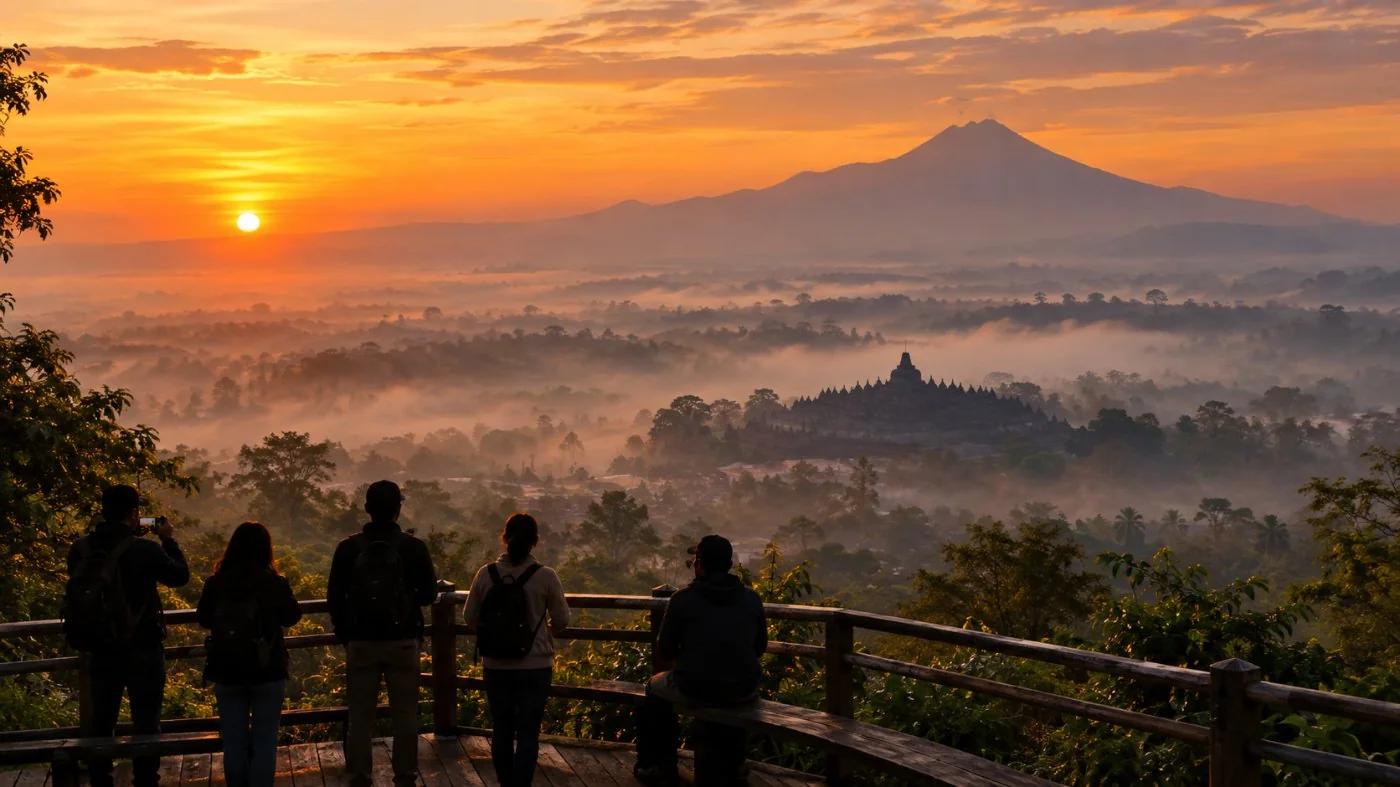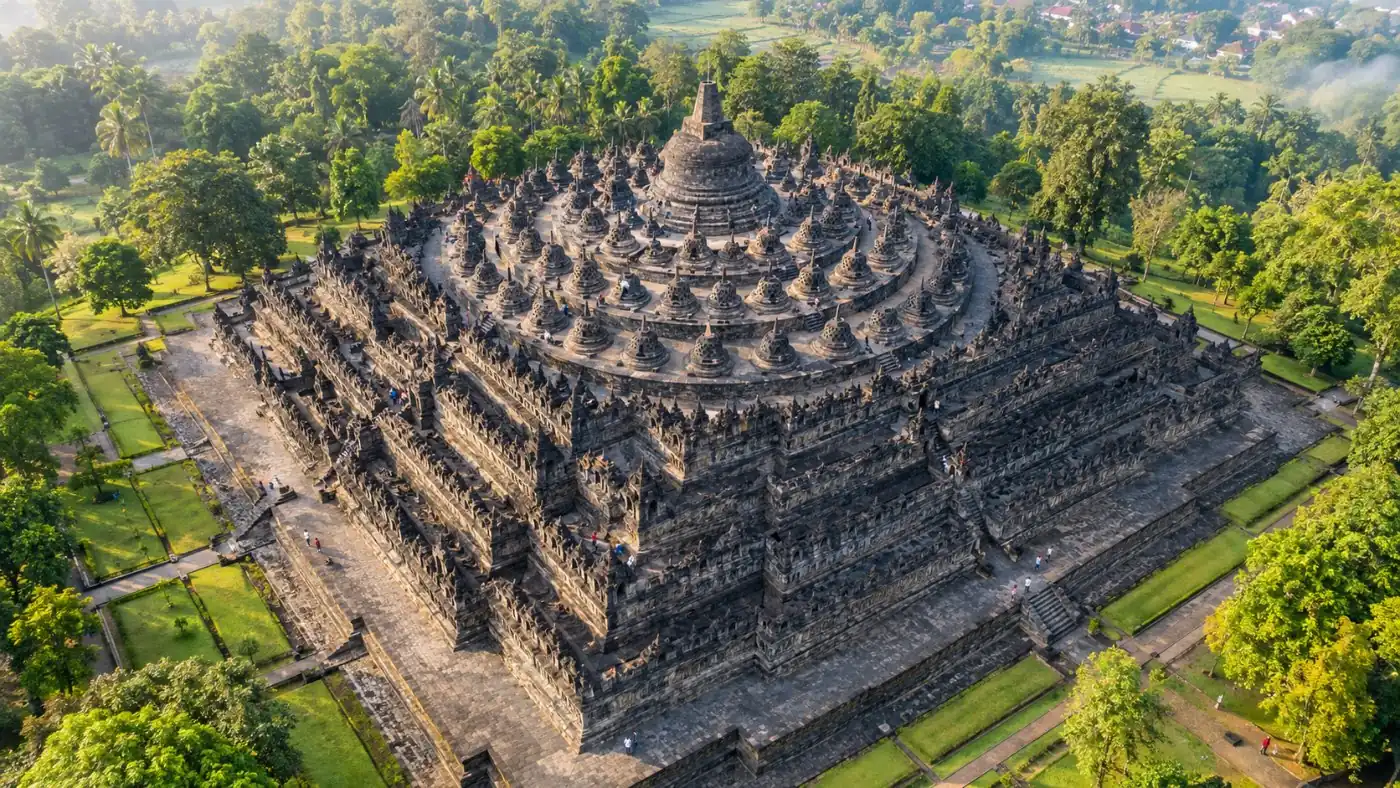
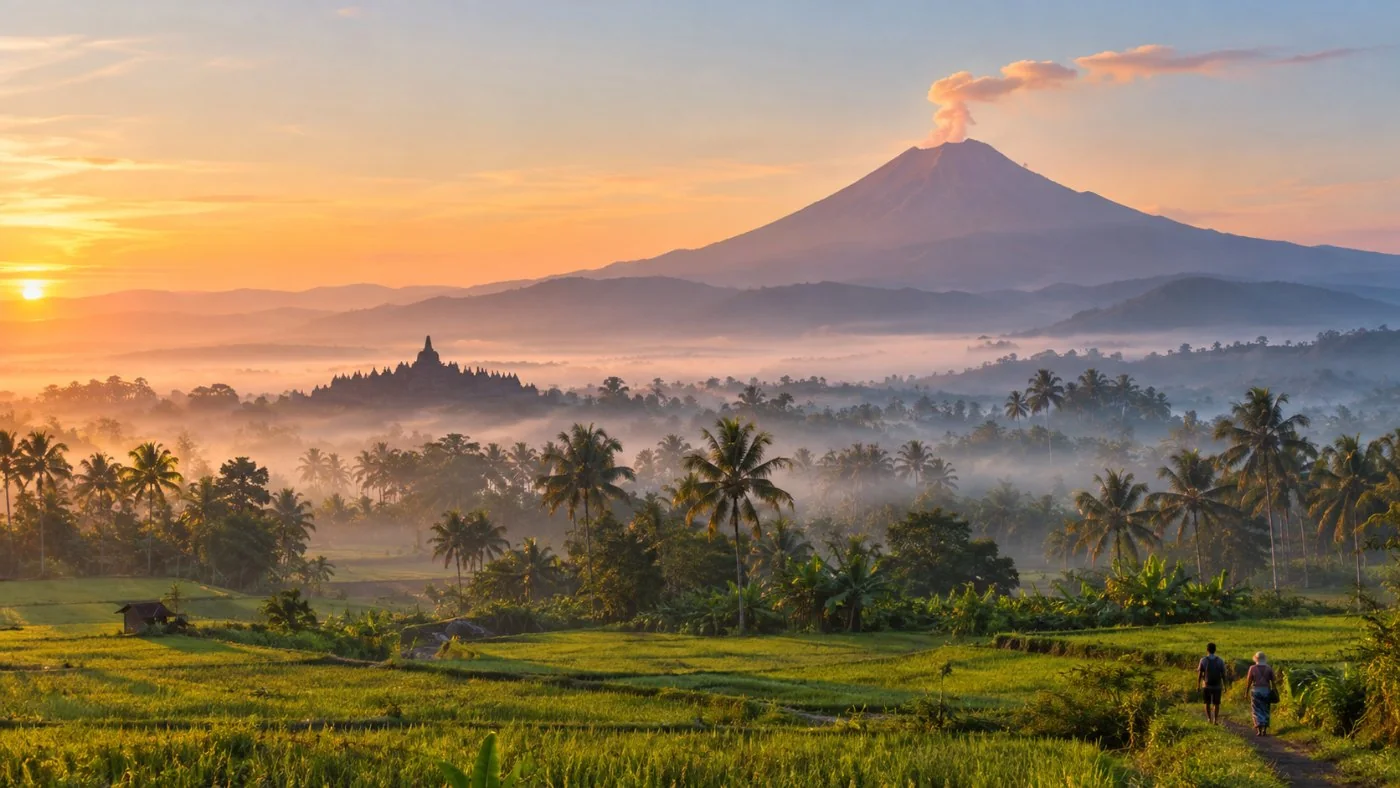
Booking choice: The Setumbu Hill sunrise, 5 to 8 hours. Book this Tour details
Borobudur is open all year and sunrise happens every day, so there is no bad month to go. There are better and worse ones. The deciding factors are rain and cloud on the volcanoes, the hour the sun comes up, and how many other people want the same view.
Sunrise times below are calculated for Borobudur's position, in local time (WIB). The real moment the sun clears the Merapi and Merbabu skyline comes a few minutes to about a quarter of an hour later.
The quick answer
June to September is the best window: the driest months, the clearest volcano views and the latest sunrise (about 05:45 to 05:53), so pickups are less brutal. It is also high season, so book the sunrise ticket and morning climbing sessions early and avoid weekends. In the wet season, November to March, mornings are often still clear because rain tends to come later in the day, but cloud on the volcanoes is more common.
What time is sunrise at Borobudur?
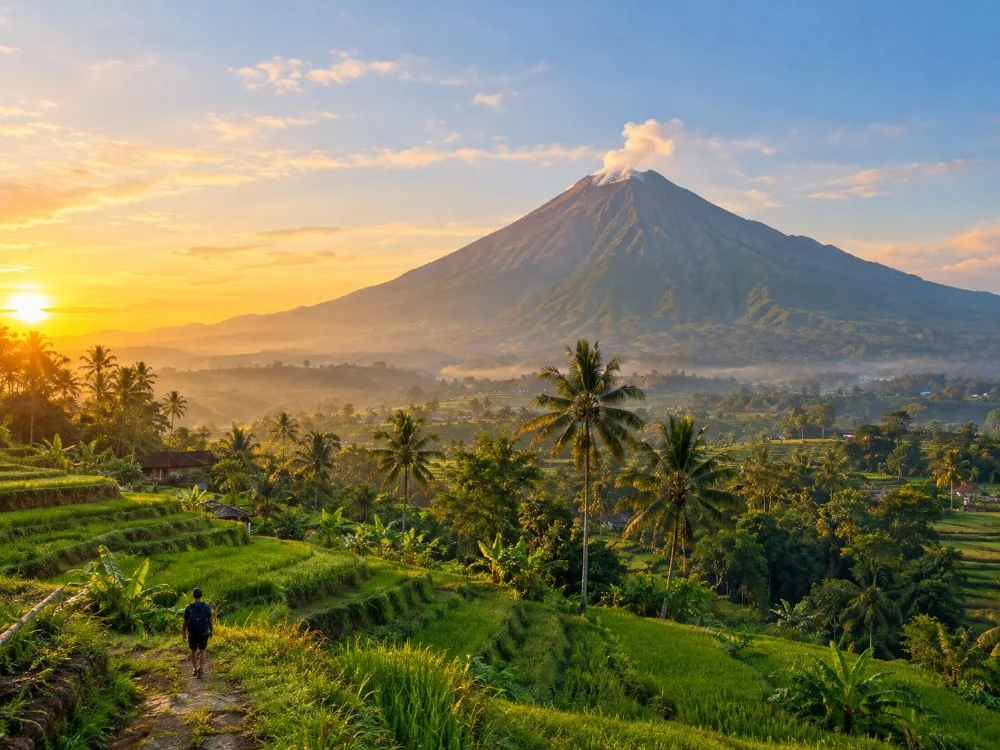
Between about 05:10 and 05:53 local time, depending on the month. It is earliest in mid-November and latest in mid-July.
First light starts about 20 minutes before the times below, and that is when the sky colours. Plan to be in position by then.
| Month (1st) | Approx. sunrise (WIB) | Season |
|---|---|---|
| January | 05:25 | Wet, the rainiest month |
| February | 05:39 | Wet |
| March | 05:44 | Wet |
| April | 05:42 | Transition |
| May | 05:40 | Dry season begins |
| June | 05:45 | Dry |
| July | 05:52 | Dry, latest sunrise mid-month |
| August | 05:52 | Dry, the driest month |
| September | 05:40 | Dry |
| October | 05:23 | Transition |
| November | 05:11 | Wet, earliest sunrise mid-month |
| December | 05:12 | Wet |
For the temple-top ticket the check-in is 04:00 whatever the month. For Setumbu the drive is built around these times; in November the sky starts to glow before 05:00.
When is the dry season at Borobudur?
Roughly May to October, with the least rain from June to September. August is the driest month on average.
Long-term figures for Magelang put January at about 430 mm of rain over some 20 rainy days and August at about 74 mm over 10, per Climate-Data. In 2026 the national weather agency, BMKG, had most of Central Java entering the dry season in May and Magelang peaking in August. April and October are the in-between months: a fair bet with fewer crowds.
Is the wet season a bad time for the sunrise?
Not necessarily. Rain tends to fall in the afternoon and evening, so many wet-season mornings start clear. The risk is cloud over the volcanoes and haze.
From November to March expect greener fields, far fewer visitors and a real chance of a grey sunrise. The paths up Setumbu and to Bukit Rhema get slippery and muddy after rain, so wear shoes with grip. If you only have one morning in the wet season, keep a back-up day if you can: tours on this site cancel free up to 24 hours before.
A small group of five at most on Setumbu Hill, with the temple as an add-on once the mist lifts.
Book thisWhen is the best chance of seeing Borobudur in the mist?
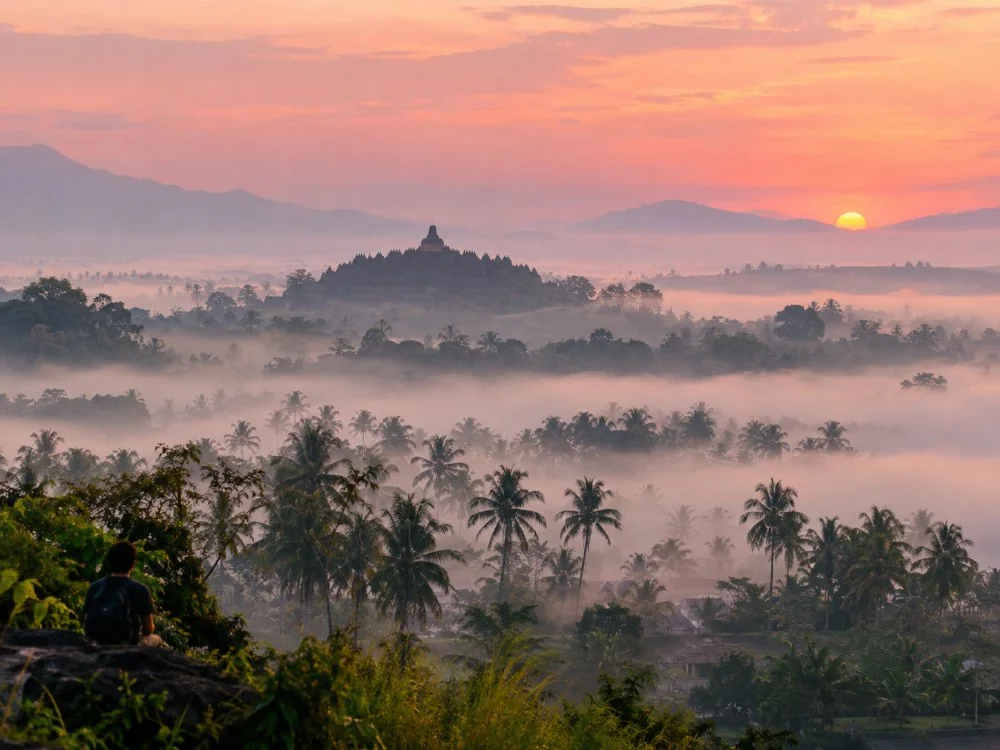
On calm, clear nights, which happen most often in the drier months. Nobody publishes reliable figures on mist by month, so treat every misty morning as luck.
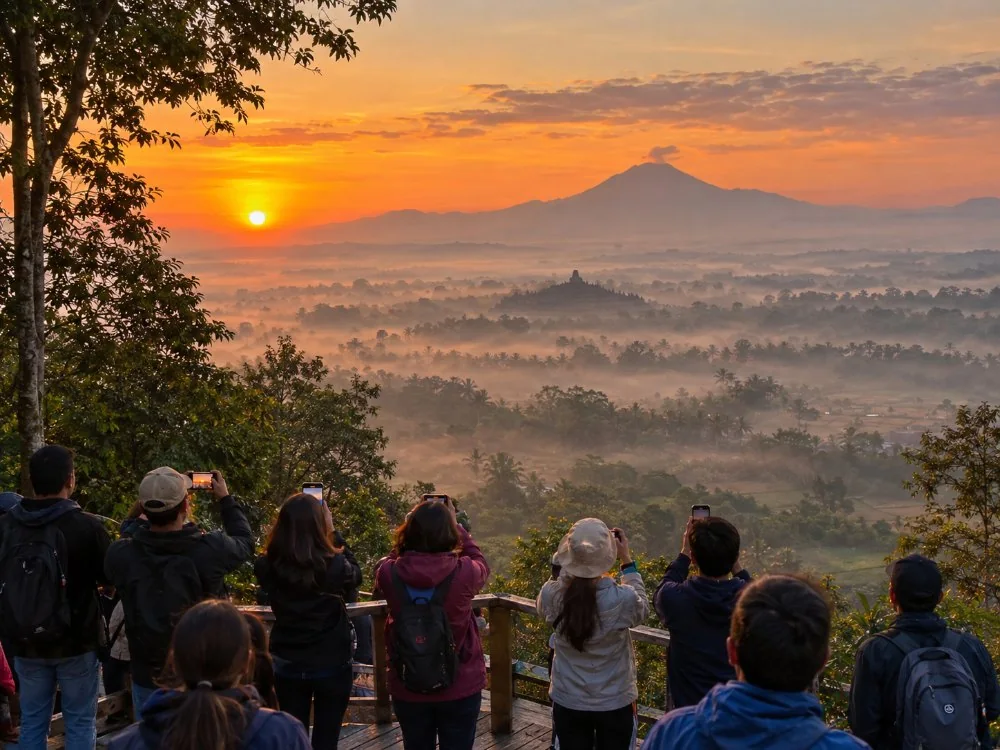
The mist is fog that settles in the Progo and Elo river valleys overnight and lifts after sunrise. It needs still air and a clear sky, the same conditions that make for a cold dawn on the hill. Setumbu, Barede and Rhema show it best because they look down on the temple. From the top terrace you are usually above it, looking across at the volcanoes. More in temple top or Setumbu Hill.
When is Borobudur most crowded?
Weekends, Indonesian school holidays from late June to mid-July, Christmas to New Year and the days around Eid. Mid-mornings are the busiest hours.
The climbing sessions cap the crowd on the stones, but the queue for them does not go away: in peak weeks the morning slots sell out and the grounds fill. Go on a weekday. Take the first session at 08:30 or one of the last two in the afternoon. On Setumbu the crush is the half-hour around sunrise and vanishes by 08:00.
Our view: skip the Saturday 08:30 slot in July if you can. Wednesday in September is a different temple.
What happens at Borobudur during Vesak?
Vesak (Waisak) is the main Buddhist festival, with a procession from Mendut to Borobudur. On the day itself public access is limited and climbing is suspended.
In 2026 Vesak fell on 31 May. The temple was open to the public until 14:00, courtyard only, with no climbing, as RRI reported. The evening lantern release is a separate ticketed event run by a Buddhist organisation, and its format changes from year to year. Vesak follows the full moon of May or June; check the date for 2027 before you plan around it.
If you want to climb, avoid Vesak day. If you want to see the ceremony, go for it and plan your climb for another day.
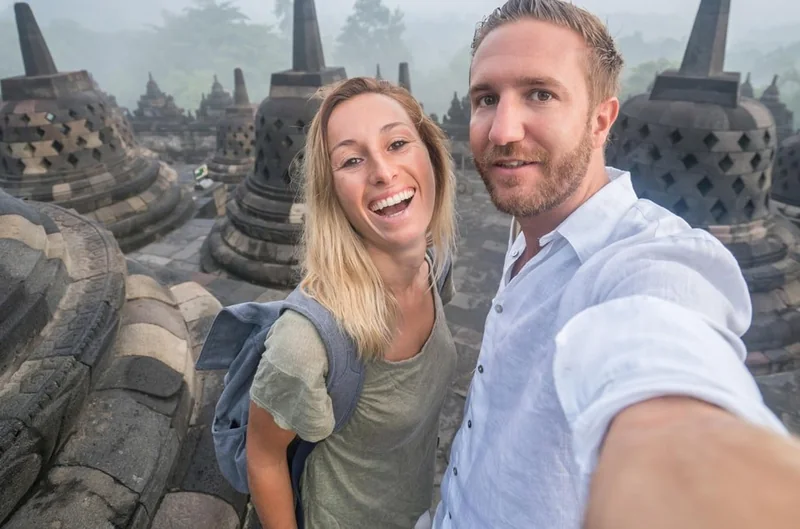
Pick your morning: Setumbu Hill or the temple top, chosen at booking, with entry and a guided climb included.
Book this Tour detailsWhat is the best time of day to visit Borobudur?
Sunrise, then the first climbing session at 08:30. Late afternoon is the second-best window, with softer light and the sunset ticket from 16:00.
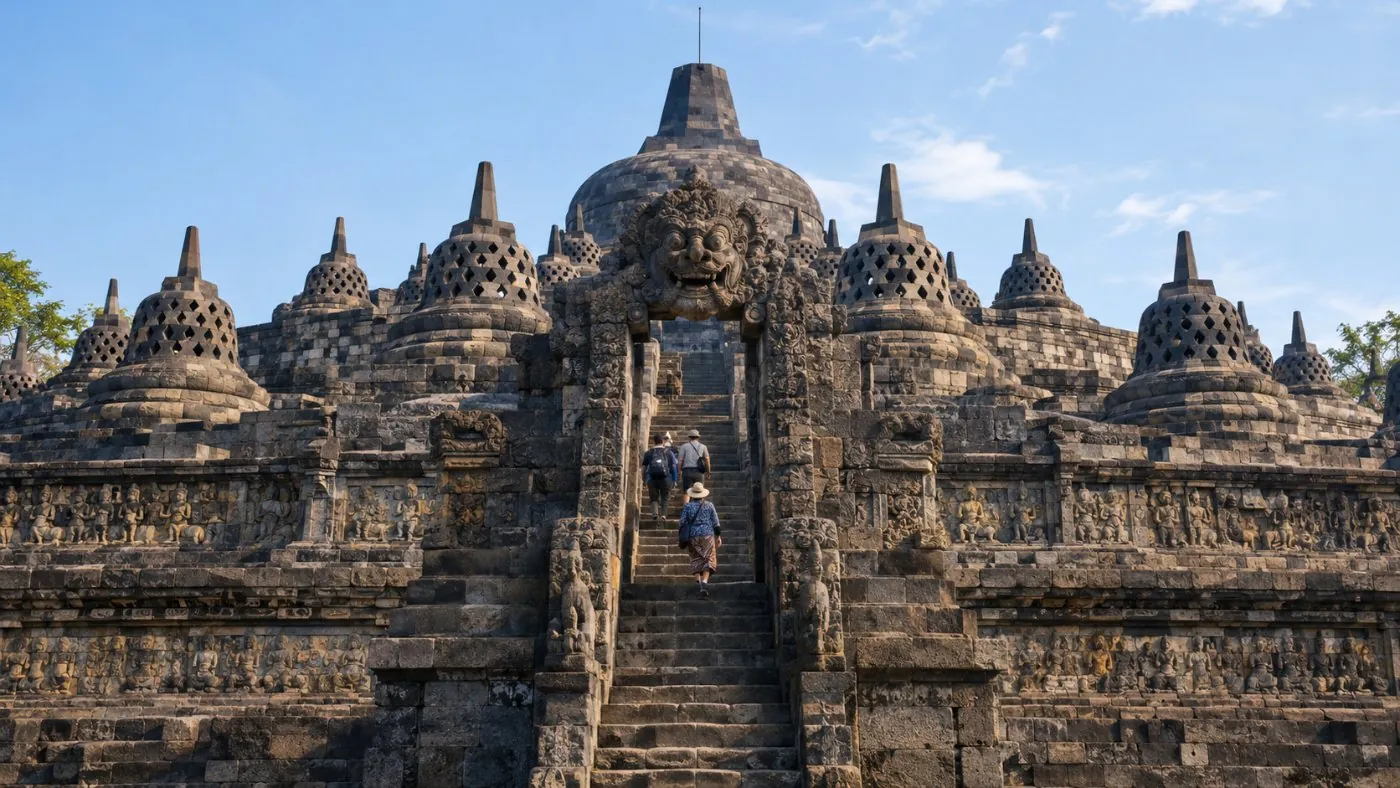
By late morning the stone heats up, the light flattens and the terraces are at their busiest. The 08:30 session after a hill sunrise is the classic pairing. In the afternoon the last sessions are calmer, and the official sunset ticket keeps you on the temple into dusk with dinner afterwards.
How much time do you need at Borobudur?
About two hours at the temple for a guided climb and the grounds, or half a day with a sunrise. Add a full day if you also want Prambanan.
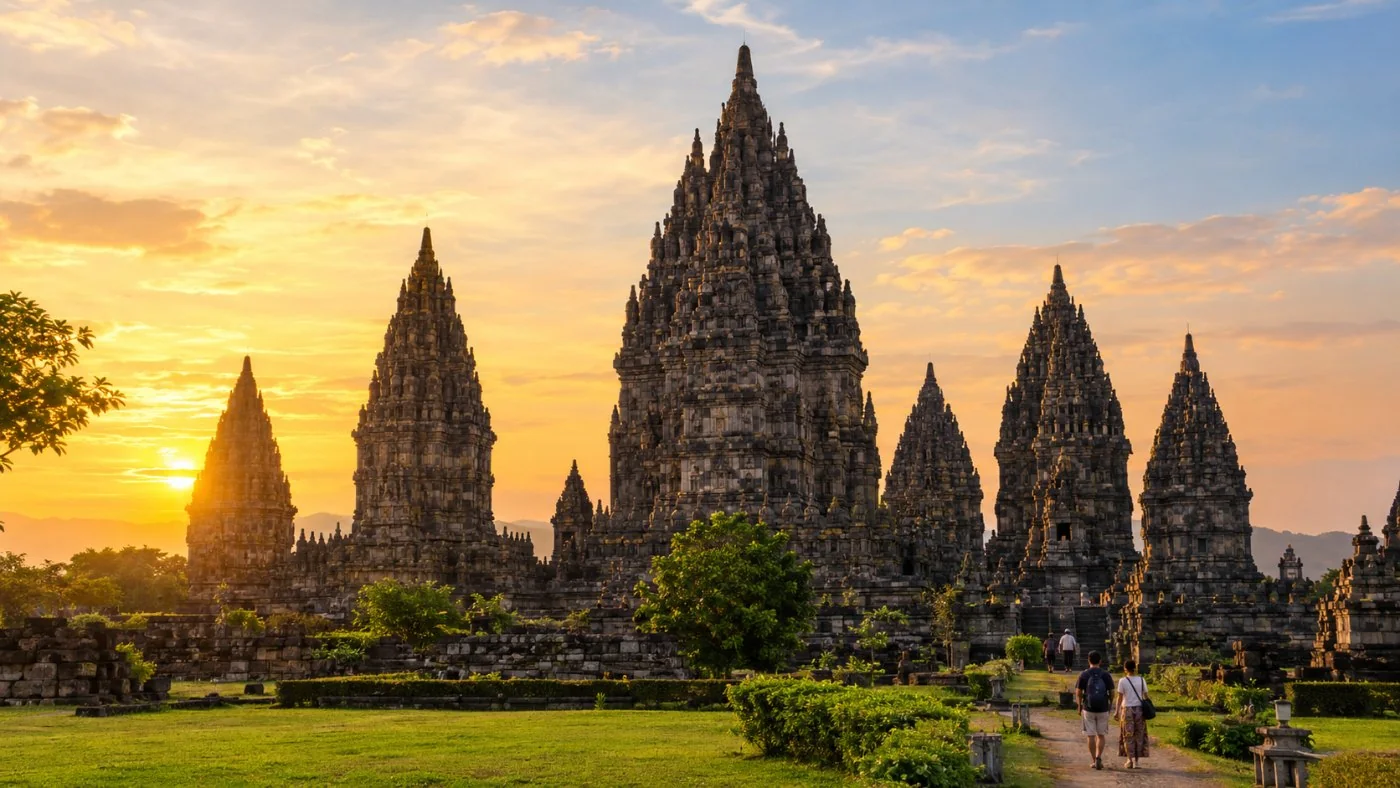
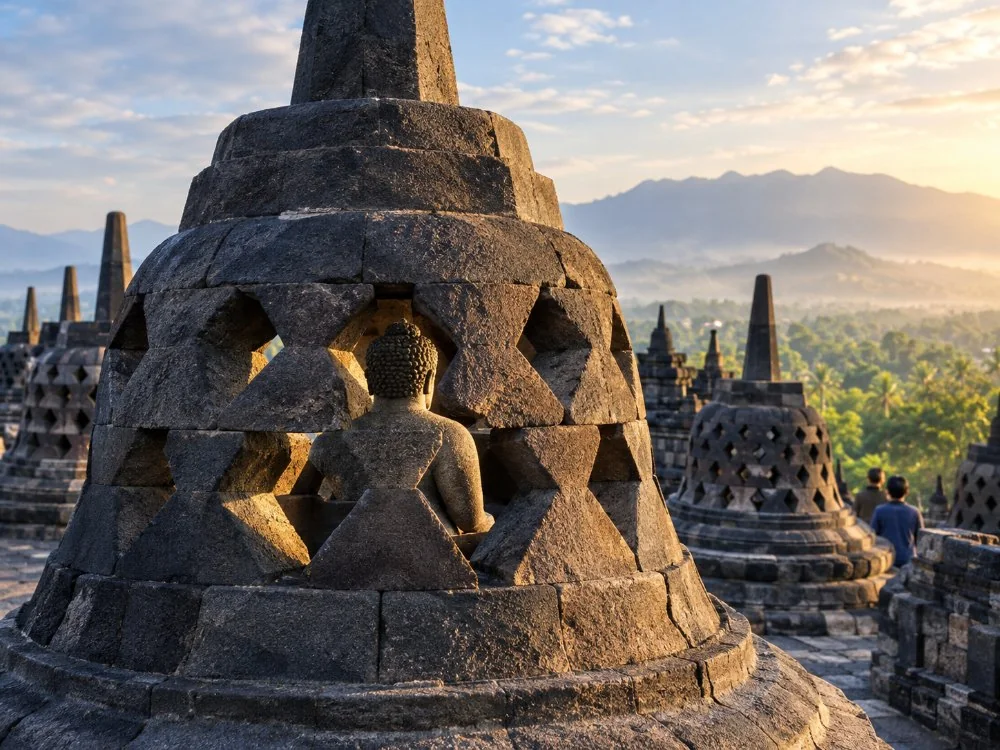
A climbing session runs about 90 minutes, and the guide gives you a short spell of free time at the top. Allow another half hour or more for the grounds and the museum. Sunrise tours from Yogyakarta take five to eight hours door to door. With Prambanan the day stretches to 10 to 12 hours; see Borobudur and Prambanan in one day.
Back at your hotel by mid-morning: a 5-hour temple sunrise, or longer options with Setumbu and Prambanan.
Book thisFrequently asked questions
What is the best month to visit Borobudur?
July and August for the driest weather and the latest sunrise, if you can book early and avoid weekends. September and early October are almost as dry with fewer people.
Is Borobudur open every day?
Yes. The temple structure is open for climbing daily from 08:30 to 17:00, and the grounds from 06:30. Vesak day and occasional special events change the hours.
Is it worth going to Borobudur in the rainy season?
Yes, with lower expectations for the sunrise. Mornings are often clear, the fields are green and the crowds are thin.
How cold is it at sunrise?
Not cold, but cooler than the valley. Setumbu is about 400 m up; a light layer is enough for the hour before dawn.
Ready to book
Choose your sunrise
Free cancellation up to 24 hours before on every option. Check what each option includes before you pay.
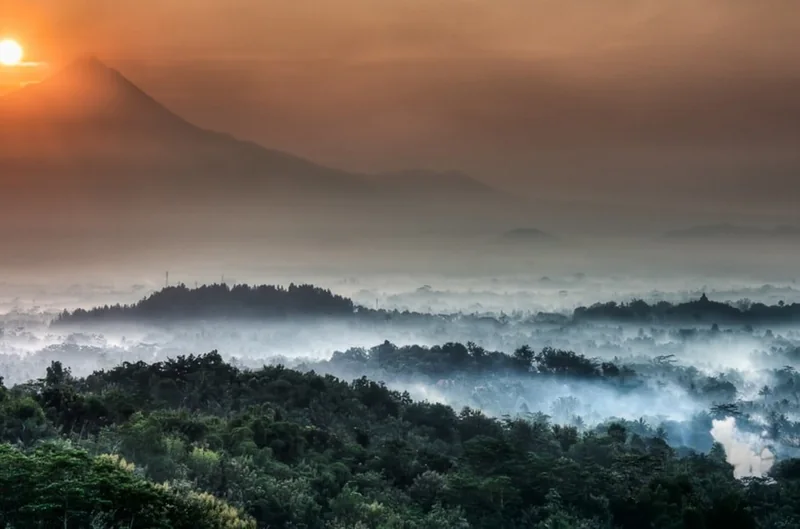
Borobudur Sunrise on Setumbu Hill
The classic misty view, max 5 people, temple as an add-on
Borobudur Sunrise: Hill or Temple, Entry Included
- Sunrise on Setumbu Hill, or inside the temple with that option
- Temple entry and climb-up access
- Local guide at Borobudur
VIP Sunrise Inside Borobudur with Breakfast
- Early access before public opening
- Licensed English-speaking guide
- Light breakfast with coffee or tea